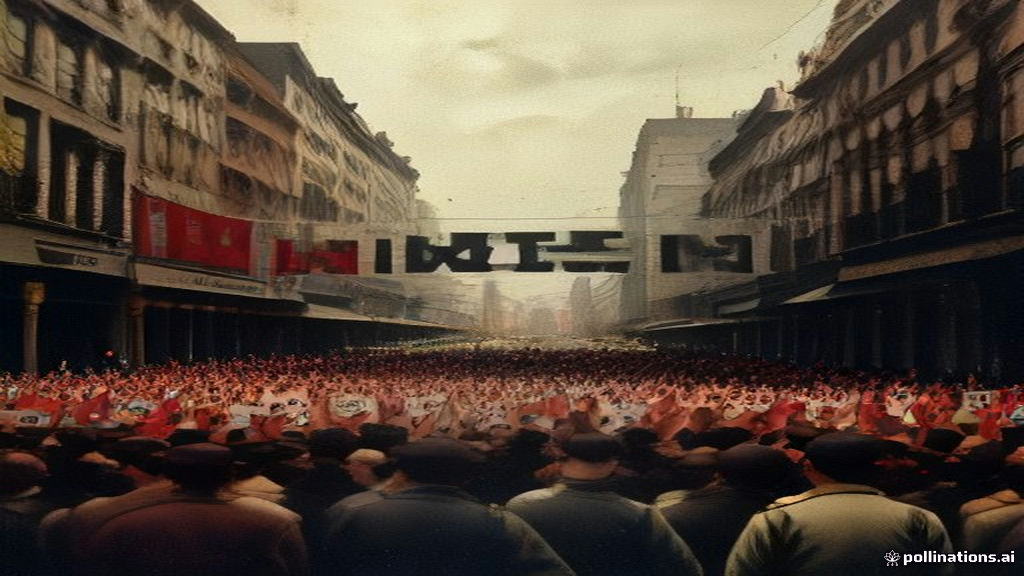
Why the Rise of Hitler Matters Even Today
Imagine a country stumbling after a huge war, like a runner tripping just before the finish line. Germany’s stumble after World War I set the stage for a dramatic climb to power.
💡 In Simple Words: Hitler became Germany’s leader because the country was poor, angry, and looking for someone to promise quick fixes. The Nazi Party used fear, promises, and clever tricks to turn that anger into power.
Key Players and Terms
Weimar Republic – the German government set up after World War I, kind of like a temporary rulebook after a big game ends.
National Socialism (Nazism) – the political ideas of the Nazi Party, mixing extreme nationalism (love of country taken to an extreme) with racism.
Enabling Act – a law that let Hitler make decisions without the parliament, similar to giving a single player control of the whole video game.
How Hitler Turned Chaos into Power
Four main forces pushed Hitler forward:
- Economic crisis: Hyper‑inflation and the Great Depression left millions without jobs.
- Treaty of Versailles: The peace treaty after WWI humiliated Germany, creating a deep sense of injustice.
- Propaganda: The Nazis flooded newspapers, radio, and rallies with simple, angry messages.
- Political maneuvering: Backroom deals with conservative parties gave Hitler a legal path to rule.
Comparison Table: Causes vs. Methods
| Cause | Method Used by Nazis |
|---|---|
| Economic hardship | Blamed Jews and Versailles, promised jobs |
| Political instability | Formed coalitions, then dissolved parliament |
| Social fear | Mass rallies, uniformed SA squads to intimidate |
Quick Summary – Bullet Points
- 1919: Weimar Republic starts, weak democracy.
- 1923: Beer Hall Putsch – failed coup, Hitler jailed, learns politics.
- 1930: Nazis become 2nd largest party.
- July 1932: Nazis win 37% of votes, still no majority.
- Jan 1933: Hitler named Chancellor.
- Feb 1933: Reichstag Fire – used to silence opponents.
- Mar 1933: Enabling Act gives Hitler dictatorial powers.
- 1934: Night of the Long Knives – removes rival SA leaders.
📝 Likely Exam Questions
1. Explain how the Treaty of Versailles contributed to Hitler’s rise.
The treaty blamed Germany for WWI, forced huge reparations, and limited its army. This humiliation fed nationalist anger, which Hitler exploited by promising to restore pride.
2. What role did the Enabling Act of 1933 play in establishing a totalitarian state?
It allowed Hitler’s cabinet to pass laws without parliamentary approval, effectively ending democracy and giving him unchecked power.
3. Discuss two ways the Nazi Party used propaganda to gain support.
They used simple slogans like “Ein Volk, ein Reich, ein Führer” (One people, one empire, one leader) and mass rallies with dramatic speeches to create emotional appeal and fear of outsiders.
4. Describe the significance of the Reichstag Fire in February 1933.
The fire was blamed on communists, letting Hitler claim an emergency, suspend civil liberties, and arrest political opponents.
5. Compare the economic situation in Germany before 1933 with the promises made by Hitler.
Unemployment hit 6 million; Hitler promised full employment, public works like the Autobahn, and a return to prosperity, which attracted desperate voters.