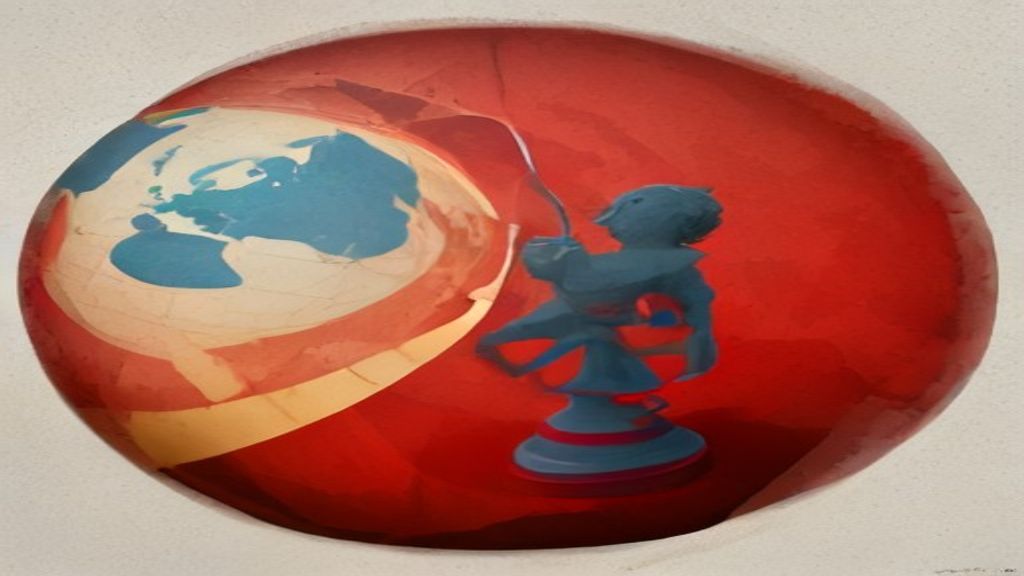
Why the Cold War still matters
Imagine a game of chess where two grandmasters never actually touch the board, but their moves decide the fate of the whole world. That’s the Cold War – a silent, high‑stakes showdown that still echoes in today’s politics.
💡 In Simple Words: The Cold War was a long‑lasting rivalry between the United States and the Soviet Union after World War II. They never fought each other directly, but they competed in arms, space, and by supporting opposite sides in other countries' wars.
What was the Cold War?
The term “Cold War” describes a period (roughly 1947‑1991) when the two superpowers – the United States (a capitalist democracy) and the Soviet Union (a communist state) – were locked in a tense stand‑off. “Cold” means there was no full‑scale fighting between them, unlike a hot war with actual battles.
Root causes
- Ideological clash: Capitalism (private ownership, free markets) vs. communism (state‑owned economy, classless society).
- Power vacuum after WWII: Europe was devastated, and both powers wanted to fill the gap.
- Security fears: The USSR feared a repeat of the 1917 invasion, while the US feared the spread of communism.
Major players
- United States (US): Led by presidents like Harry Truman, Dwight Eisenhower, John Kennedy, and Ronald Reagan.
- Soviet Union (USSR): Governed by leaders such as Joseph Stalin, Nikita Khrushchev, and Mikhail Gorbachev.
- NATO (North Atlantic Treaty Organization): A defensive military alliance of Western countries.
- Warsaw Pact: The Eastern bloc’s counterpart to NATO.
Key phases of the Cold War
| Phase | Time period | What happened |
|---|---|---|
| Early tension | 1947‑1953 | Truman Doctrine, Marshall Plan, Berlin Blockade, Korean War. |
| Escalation | 1953‑1962 | Arms race, Sputnik launch, Cuban Missile Crisis. |
| Détente | 1962‑1979 | Strategic Arms Limitation Talks (SALT), Nixon’s visit to China, Helsinki Accords. |
| Renewed tension | 1979‑1985 | Afghan war, Reagan’s “Evil Empire” rhetoric, arms buildup. |
| End of the Cold War | 1985‑1991 | Gorbachev’s reforms (Glasnost, Perestroika), fall of Berlin Wall, USSR dissolution. |
graph TD
A[Post‑WWII tensions] --> B[Arms race & proxy wars]
B --> C[Détente & arms control]
C --> D[Renewed rivalry]
D --> E[Reforms & collapse of USSR]
How the Cold War shaped the world
Think of the Cold War as a massive ripple in a pond. Every splash – a missile test, a space launch, a proxy war – sent waves that changed politics, technology, and everyday life.
- Technology race: The space race gave us satellites, which now power GPS and TV.
- Military doctrines: “Mutual assured destruction” (MAD) meant both sides had enough nukes to destroy each other, keeping peace by fear.
- Global alliances: Many countries joined NATO or the Warsaw Pact, shaping today’s geopolitical map.
- Proxy wars: Conflicts in Korea, Vietnam, and Afghanistan were fought by local forces but funded by the superpowers.
Quick recap – what to remember for the exam
- Cold War = ideological rivalry (capitalism vs. communism) without direct war.
- Key causes: ideology, power vacuum, security fears.
- Major phases: Early tension, Escalation, Détente, Renewed tension, End.
- Important events: Berlin Blockade, Korean War, Cuban Missile Crisis, Space Race, fall of Berlin Wall.
- Impact: technology boom, NATO/Warsaw Pact, proxy wars, end of colonial empires.
📝 Likely Exam Questions
- Explain why the Cold War is called “cold”.
Answer: Because the United States and the Soviet Union never fought a full‑scale war against each other; their competition was limited to arms buildup, propaganda, and indirect conflicts. - List and briefly describe two major crises of the Cold War.
Answer: (a) Berlin Blockade (1948‑49) – USSR blocked Western access to West Berlin, prompting the airlift. (b) Cuban Missile Crisis (1962) – Soviet missiles placed in Cuba led to a 13‑day standoff that nearly triggered nuclear war. - What was the policy of ‘containment’ and which country introduced it?
Answer: Containment was a US strategy to stop the spread of communism, first articulated by diplomat George Kennan in 1947. - How did the Cold War affect scientific progress?
Answer: Competition spurred the space race, leading to the launch of Sputnik and the first human in space, which later translated into satellite technology used for communication and navigation today. - Why did the Cold War end in 1991?
Answer: Gorbachev’s reforms (glasnost – openness, perestroika – restructuring) weakened the Soviet system, leading to the fall of the Berlin Wall in 1989 and the eventual dissolution of the USSR in 1991.
#ISC#Class 12#History#Cold War#Exam Notes
More from us