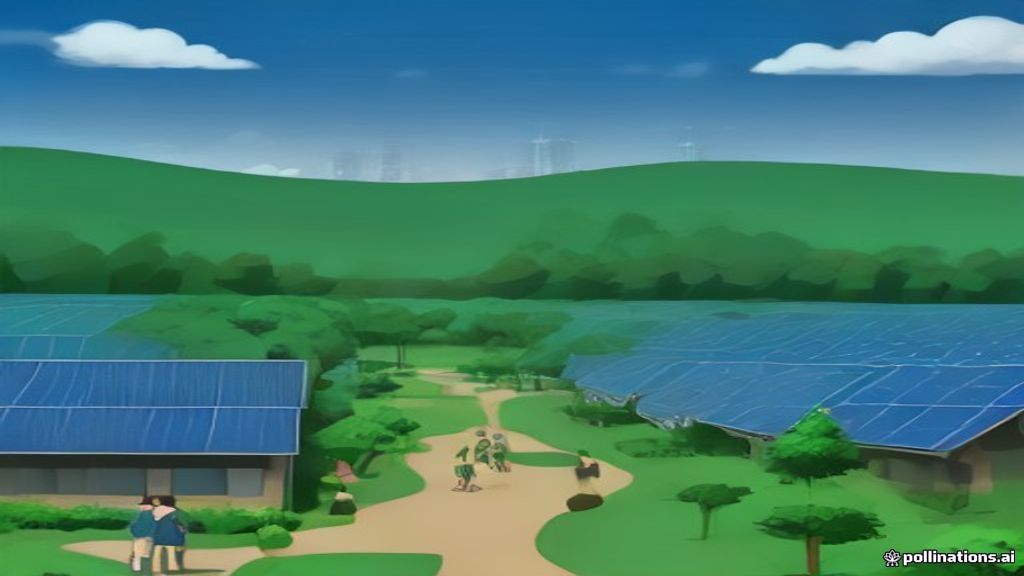
Why talk about sustainable development?
Imagine you have a favorite video game that keeps getting new levels. If the game’s creators keep adding more and more without fixing bugs, the game will eventually crash. The same thing can happen to our planet if we keep using resources recklessly.
💡 In Simple Words: Sustainable development means using what we need today—like water, wood, or energy—so that there’s still enough left for tomorrow’s kids. It’s about balancing our wants with the Earth’s limits.
What is sustainable development?
Sustainable development is a way of growing and improving lives without ruining the environment for future generations. The word “sustainable” means something that can keep going for a long time without breaking down. “Development” refers to progress—building schools, factories, roads, and better living standards.
Key idea behind the definition
The famous Brundtland Report (1987) described it as “meeting the needs of the present without compromising the ability of future generations to meet their own needs.” In plain language, it’s like sharing a pizza so everyone gets a slice now and still has enough left for later.
Three pillars that hold up sustainable development
Think of a three‑legged stool. If one leg is missing, the stool wobbles and falls. Sustainable development rests on three equally important legs:
- Economic – making money and jobs without wasting resources.
- Social – ensuring fairness, health, and education for all people.
- Environmental – protecting air, water, soil, and wildlife.
How the three pillars work together
When a factory decides to use solar panels (environmental), it can also lower electricity bills (economic) and provide a healthier workplace (social). If any one pillar is ignored, the whole system becomes unstable.
Everyday examples of sustainable development
Here are a few things you might already be doing, without even realizing they’re “sustainable”:
- Using a reusable water bottle instead of buying plastic ones.
- Planting a small garden at home, which gives fresh food and improves air quality.
- Choosing a school bus over a private car, which cuts down on fuel use and traffic.
Comparison table: Sustainable vs. Unsustainable Development
| Aspect | Sustainable Development | Unsustainable Development |
|---|---|---|
| Resource use | Uses resources at a rate that can be naturally replenished | Uses resources faster than they can recover |
| Impact on people | Improves quality of life for all, now and later | Benefits a few now, harms many later |
| Environmental health | Protects ecosystems, reduces pollution | Degrades habitats, increases waste |
| Economic outlook | Long‑term profitability, stable jobs | Short‑term profit, risk of collapse |
How you can practice sustainable development at school
Students have a lot of power. Try these simple steps:
- Start a “green club” that promotes recycling and tree‑planting.
- Audit your school’s energy use and suggest LED lights.
- Organise a “no‑plastic day” in the cafeteria.
- Share ideas with teachers about using digital notes instead of paper.
Why sustainable development matters for ICSE exams
ICSE questions love to ask you to define the term, list the three pillars, and give real‑world examples. Knowing the flowchart steps helps you earn extra marks for “process description.”
📝 Likely Exam Questions
- Define sustainable development.
Answer: Sustainable development is progress that meets today’s needs without harming the ability of future generations to meet theirs, balancing economic, social, and environmental goals. - State the three pillars of sustainable development and give one example for each.
Answer: Economic – using renewable energy; Social – providing universal education; Environmental – protecting forests. - Explain how sustainable development differs from unsustainable development.
Answer: Sustainable development uses resources at a replenish-able rate, benefits all people now and later, protects ecosystems, and aims for long‑term economic stability, whereas unsustainable development exhausts resources, benefits a few, harms the environment, and risks future collapse. - Suggest two actions a school can take to become more sustainable.
Answer: Install solar panels on the roof; start a composting program for kitchen waste. - Why are the three pillars called “pillars”?
Answer: Like a three‑legged stool, each pillar supports the whole; if one is weak, the entire development becomes unstable.