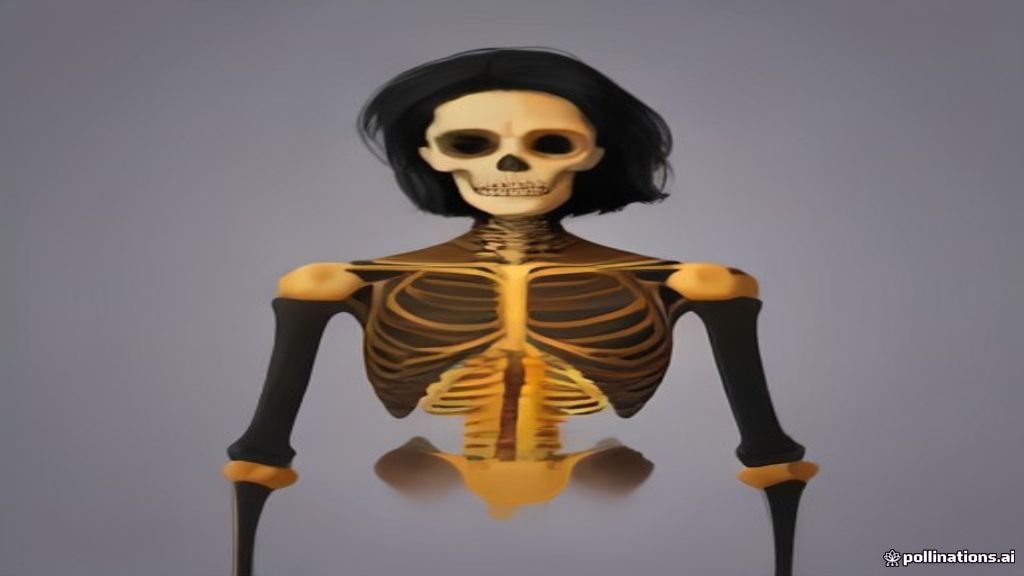
Ever wondered why you can stand tall and run fast? It’s all thanks to your skeletal system.
The human skeletal system is the body’s sturdy framework that holds you up, protects vital organs, and helps you move. Think of it like the steel beams in a house – without them, everything would collapse.
What is the Human Skeletal System?
The skeletal system is a collection of bones, cartilage (a smooth, rubbery tissue), and ligaments (strong bands that connect bone to bone). In total, an adult has 206 bones, each acting like a tiny piece of a giant LEGO set.
Main Functions
- Support: Gives your body shape and holds everything up.
- Protection: Shields delicate organs – the skull guards the brain, the rib cage guards the heart and lungs.
- Movement: Muscles pull on bones like ropes on a pulley, letting you walk, jump, or wave.
- Mineral storage: Bones store calcium and phosphorus, which can be released into the blood when needed.
- Blood cell production: The inner spongy part of some bones (called marrow) makes red cells, white cells, and platelets.
How is the Skeleton Organized?
Scientists split the skeleton into two big groups – the axial skeleton and the appendicular skeleton. This helps you remember which bones belong where.
Axial Skeleton
The axial part forms the central axis of the body. It includes:
- Skull – protects the brain.
- Vertebral column – a stack of 33 vertebrae that makes up the spine.
- Rib cage – 12 pairs of ribs plus the sternum (breastbone) that protect the heart and lungs.
Appendicular Skeleton
The appendicular part includes the bones of the limbs and the girdles that attach them to the axial skeleton.
- Shoulder girdle – clavicle (collarbone) and scapula (shoulder blade).
- Upper limbs – humerus (upper arm), radius and ulna (forearm), carpals, metacarpals, and phalanges (hand bones).
- Pelvic girdle – hip bones that connect the spine to the legs.
- Lower limbs – femur (thigh), patella (kneecap), tibia and fibula (shin), tarsals, metatarsals, and phalanges (foot bones).
| Feature | Axial Skeleton | Appendicular Skeleton |
|---|---|---|
| Number of bones | 80 | 126 |
| Main purpose | Support & protect central organs | Enable movement of limbs |
| Key parts | Skull, vertebral column, rib cage | Shoulder & pelvic girdles, arms, legs |
Types of Bones and Their Shapes
Not all bones look the same. Their shape tells you what they do.
- Long bones: Longer than they are wide, like the femur. They act as levers for movement.
- Short bones: Roughly cube‑shaped, such as the carpals in the wrist. They provide stability and a little movement.
- Flat bones: Thin and curved, like the sternum or scapula. They protect organs and offer large surfaces for muscle attachment.
- Irregular bones: Complex shapes that don’t fit other categories, e.g., vertebrae.
- Sesamoid bones: Small, round bones that develop inside tendons, the best known being the patella (kneecap).
Key Bones to Remember for Exams
ICSE exams love quick‑recall lists. Keep these in mind:
- Skull – 22 bones (8 facial, 14 cranial).
- Vertebral column – 7 cervical, 12 thoracic, 5 lumbar, sacrum (5 fused), coccyx (4 fused).
- Rib cage – 12 pairs of ribs + sternum.
- Upper limb – Humerus, radius, ulna, carpals (8), metacarpals (5), phalanges (14).
- Pelvic girdle – Ilium, ischium, pubis (each side).
- Lower limb – Femur, patella, tibia, fibula, tarsals (7), metatarsals (5), phalanges (14).
Quick Summary
- Support, protect, move, store minerals, make blood cells.
- Axial (80 bones) = head & trunk; Appendicular (126 bones) = limbs & girdles.
- Five bone types: long, short, flat, irregular, sesamoid.
- Remember the major bone groups – they’re frequent MCQ choices.
📝 Likely Exam Questions
- What are the two main divisions of the human skeleton and give one example of a bone from each?
Answer: Axial skeleton (e.g., skull) and appendicular skeleton (e.g., femur). - List three functions of the skeletal system.
Answer: Provides support, protects vital organs, and assists movement. - Differentiate between a long bone and a flat bone with examples.
Answer: Long bones are longer than wide and act as levers – e.g., femur. Flat bones are thin and protect organs – e.g, sternum. - How many vertebrae are present in the cervical region?
Answer: Seven cervical vertebrae. - Why is the patella classified as a sesamoid bone?
Answer: Because it forms within a tendon (the quadriceps tendon) to protect the joint and improve leverage.