Ever wonder how a tiny drop of blood makes a round‑trip around your body in under a minute?
💡 In Simple Words: The circulatory system is like a delivery service. The heart is the driver, blood vessels are the streets, and blood is the package that carries food, oxygen, and messages around your body.
What is the Circulatory System?
The circulatory system is the body’s transport network. Think of it like a city’s road system that moves people (blood) to every house (cells) and brings back waste.
Main Parts of the Human Circulatory System
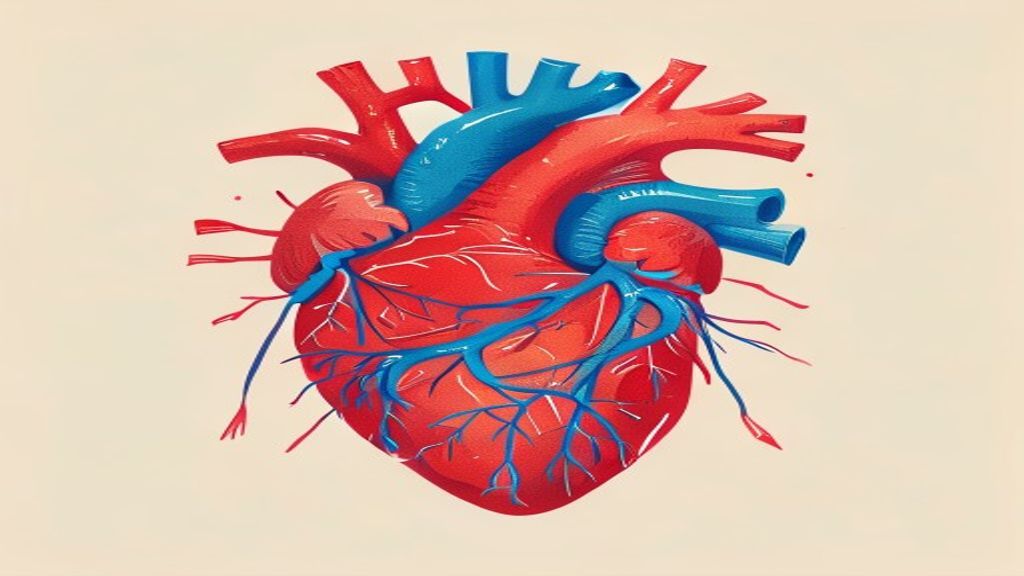
- Heart – a muscular pump that pushes blood. It has four chambers: two atria (upper rooms) and two ventricles (lower rooms).
- Blood vessels – tubes that carry blood. Arteries take blood away from the heart, veins bring it back, and capillaries are tiny bridges where exchange happens.
- Blood – the fluid cargo. It contains red cells (carry oxygen), white cells (fight germs), platelets (stop bleeding), and plasma (water‑based solution).
How Blood Flows: The Double Circulation Pathway
Our hearts have a “double” circuit – one loop sends blood to the lungs, the other sends it to the rest of the body. This keeps oxygen‑rich and oxygen‑poor blood separate.
graph TD
A[Right Atrium & Ventricle] --> B[Pulmonary Artery] --> C[Lungs] --> D[Pulmonary Vein] --> E[Left Atrium & Ventricle] --> F[Aorta] --> G[Body] --> H[Vena Cava] --> A
Key Functions of the Circulatory System
- Delivers oxygen and nutrients to every cell.
- Removes carbon dioxide and metabolic waste.
- Transports hormones, heat, and immune cells.
- Helps maintain body temperature and pH balance.
Systemic vs Pulmonary Circulation: Quick Comparison
| Feature | Systemic Circulation | Pulmonary Circulation |
|---|---|---|
| Where does it go? | From left side of heart to body | From right side of heart to lungs |
| Oxygen level of blood | Rich (oxygenated) | Poor (deoxygenated) |
| Main artery | Aorta | Pulmonary artery |
| Main vein returning to heart | Vena cava | Pulmonary vein |
Quick Summary
- Heart = pump with 4 chambers.
- Arteries = roads away from heart; veins = roads back.
- Double circulation keeps oxygenated and de‑oxygenated blood separate.
- Systemic loop serves the body; pulmonary loop serves the lungs.
📝 Likely Exam Questions
- What are the three main components of the human circulatory system?
Answer: Heart, blood vessels, and blood. - Explain why humans have a double circulation system.
Answer: It separates oxygen‑rich from oxygen‑poor blood, allowing efficient gas exchange in the lungs and delivering oxygen quickly to tissues. - Match the following: Aorta – ?, Pulmonary vein – ?, Vena cava – ?.
Answer: Aorta – carries oxygen‑rich blood from left ventricle to body; Pulmonary vein – carries oxygen‑rich blood from lungs to left atrium; Vena cava – carries oxygen‑poor blood from body to right atrium. - Describe the pathway of blood through the heart in one sentence.
Answer: Blood enters the right atrium, moves to the right ventricle, is pumped to the lungs, returns to the left atrium, goes to the left ventricle, and is sent out through the aorta. - Why are capillaries important?
Answer: Their thin walls allow oxygen, nutrients, and waste to pass between blood and body cells.
#ICSE#Class 9#Biology#Circulatory System#Human Anatomy
More from us