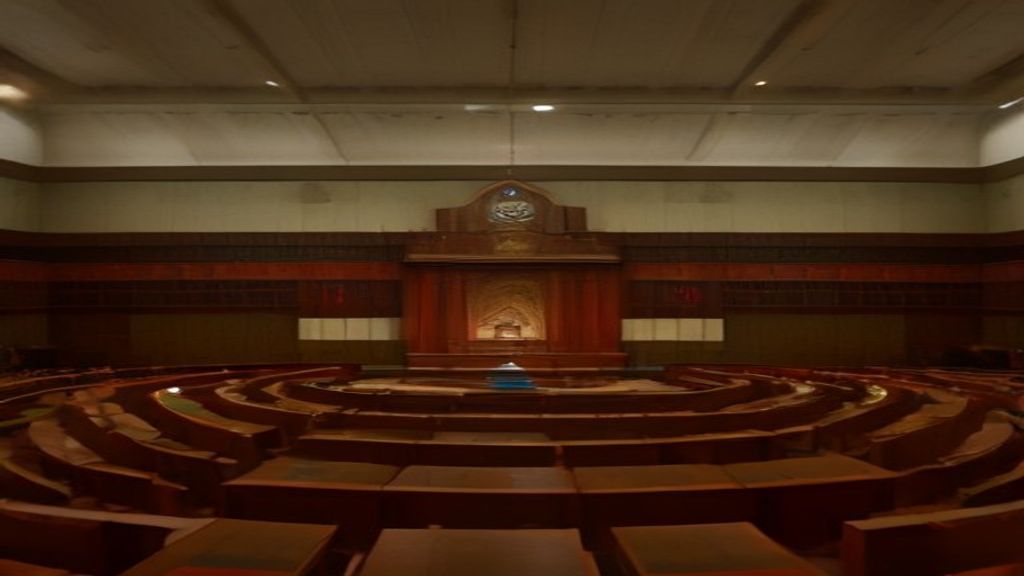
Why care about the powers of Lok Sabha and Rajya Sabha?
Imagine a school where two student councils share decision‑making. One speaks for the whole school, the other looks out for each class. In India, the two councils are the Lok Sabha and the Rajya Sabha, and knowing who can do what helps you understand how laws are shaped.
💡 In Simple Words: The Lok Sabha (House of the People) and the Rajya Sabha (Council of States) are like two teams in a relay race. Each team has its own strengths – the Lok Sabha can start most races, while the Rajya Sabha can finish some of them. Together they decide the country’s laws.
Lok Sabha – the People’s House
Key powers of Lok Sabha
- Money Bill authority: Only the Lok Sabha can introduce a Money Bill, which deals with taxes and government spending. Think of it as the class treasurer who decides how the budget is spent.
- Confidence of the government: The Prime Minister and the cabinet stay in office only as long as they have the support of a majority in the Lok Sabha. It’s like a team captain who must keep the players’ vote to stay leader.
- Passing ordinary bills: For most laws (called ordinary bills), the Lok Sabha’s approval is enough if the Rajya Sabha does not reject them within 14 days. This is similar to a student council proposal that goes ahead if the other council doesn’t object quickly.
- Joint sitting trigger: If the two houses disagree on a bill for more than 30 days, the President can call a joint sitting where members of both houses vote together. Imagine both councils meeting in the same room to settle a dispute.
Rajya Sabha – the States’ House
Key powers of Rajya Sabha
- Review and delay: The Rajya Sabha can suggest changes to ordinary bills and can delay them up to six months in the first stage and two months in the second. It’s like a senior class reviewing a junior’s proposal before it’s accepted.
- Legislation on states: It can introduce and pass bills that affect only the states, such as laws on education or health that need state cooperation.
- Special powers on constitutional amendments: For changing the Constitution, the Rajya Sabha’s approval carries the same weight as the Lok Sabha’s – both must agree.
- Removal of judges and officials: The Rajya Sabha participates in the impeachment process of high‑ranking officials, acting like a senior committee that checks the conduct of important members.
Side‑by‑side comparison
| Aspect | Lok Sabha | Rajya Sabha |
|---|---|---|
| Who can start a Money Bill? | Only Lok Sabha | Cannot start; can only approve or reject within 14 days |
| Control over the government | Can dismiss the government by a vote of no‑confidence | Has no such power |
| Delay of ordinary bills | Can pass without Rajya Sabha if rejected after 14 days | Can delay up to 6 months (first reading) + 2 months (second reading) |
| Role in constitutional amendment | Equal partner – needs 2/3 majority | Equal partner – needs 2/3 majority |
| Representation | Directly elected by people (≈543 members) | Elected by state legislatures and some appointed members (≈245 members) |
How a Money Bill moves through the houses
graph TD
A[Lok Sabha introduces Money Bill] --> B[Debate & pass in Lok Sabha]
B --> C[Send to Rajya Sabha]
C --> D[Rajya Sabha can suggest changes (30 days max)]
D --> E[Lok Sabha decides on suggestions]
E --> F[Bill becomes law after President's assent]
Why these powers matter to you
When the Lok Sabha decides on a new tax, that directly affects the pocket money you might receive. If the Rajya Sabha pushes for a longer school holiday, it’s because it can delay or amend the bill that proposes the change. Understanding who holds which lever helps you see why certain news headlines focus on one house over the other.
📝 Likely Exam Questions
- Explain why the Lok Sabha has a special role in Money Bills.
Model answer: Only the Lok Sabha can introduce a Money Bill because it represents the people who pay taxes. The Rajya Sabha can only review it for up to 14 days and cannot amend it, ensuring that money‑related decisions stay with the directly elected house. - List two powers that are unique to the Rajya Sabha.
Model answer: (i) It can delay ordinary bills for up to eight months, giving states a chance to review legislation. (ii) It participates equally with the Lok Sabha in passing constitutional amendments. - What happens if the Lok Sabha and Rajya Sabha disagree on an ordinary bill for more than 30 days?
Model answer: The President may summon a joint sitting of both houses, where members vote together. The decision of the majority in this joint sitting decides the fate of the bill. - How does the confidence of the government relate to the Lok Sabha?
Model answer: The government must retain the support of a majority of Lok Sabha members. If it loses a vote of no‑confidence, the Prime Minister must resign or request fresh elections. - Give one example of a situation where the Rajya Sabha can influence a law that the Lok Sabha has passed.
Model answer: The Rajya Sabha can suggest amendments to an ordinary bill. If the Lok Sabha accepts those changes, the bill incorporates Rajya Sabha’s input before becoming law.
#ICSE#Class 10#History#Civics#Lok Sabha#Rajya Sabha
More from us