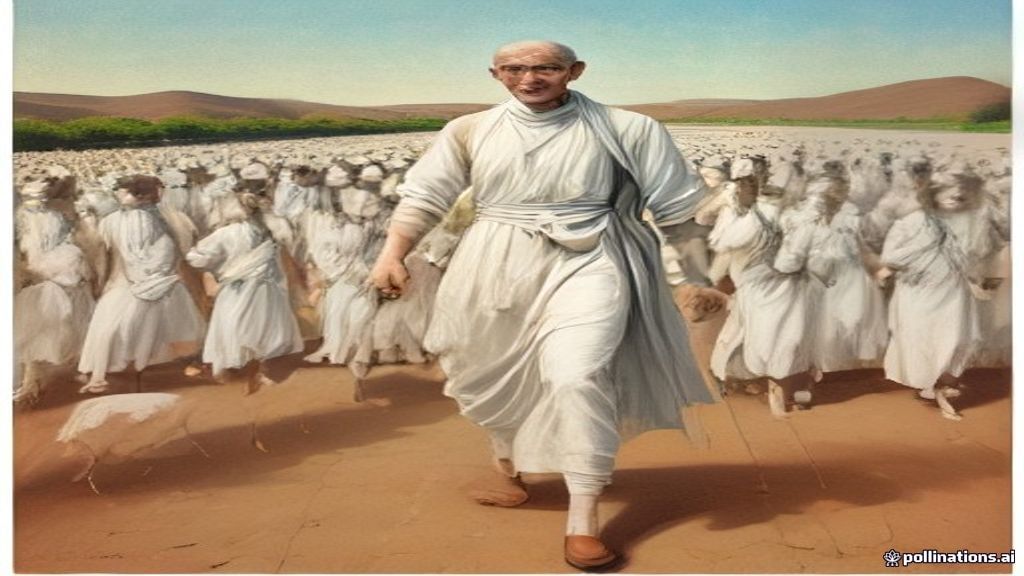
Why the Gandhian era still matters
Imagine a country where millions decide to stop buying British goods, refuse to pay taxes, and even march to the sea to make their own salt. That was India in the 1920s‑30s, and it changed the whole freedom struggle.
💡 In Simple Words: Gandhi asked Indians to peacefully refuse British rule by quitting schools, courts and jobs (Non‑Cooperation). Later he led them to break unfair laws like the salt tax (Civil Disobedience). Both moves were non‑violent, but the second was bolder and more focused.
What was the Gandhian era?
The Gandhian era refers to the period when Mahatma Gandhi became the main strategist for India’s fight for freedom. His core idea was ahimsa (non‑violence) – like refusing to push a bully instead of fighting back. He also believed in satyagraha – holding firmly to truth, even when it means breaking a law that is morally wrong.
Non‑Cooperation Movement (1920‑1922)
After World War I, the British passed the Rowlatt Act which let them imprison people without trial. Gandhi called for a mass protest called the Non‑Cooperation Movement.
- What people did: quit schools, offices, courts, and British‑run shops; boycott foreign clothes and use khadi (hand‑spun cloth).
- Goal: make British administration unworkable without using violence.
- Result: millions joined, but the movement was halted after the Chauri Chaura incident where protesters set a police station on fire, killing 23 officers. Gandhi felt any bloodshed betrayed his principle of non‑violence, so he called off the movement.
Why the movement was suspended
Think of a game where you’re playing fair, but a teammate suddenly cheats. Even if you’re winning, you’d stop the game because the spirit is broken. Gandhi felt the same – the spirit of non‑violence was broken, so he paused the protest to keep his moral high ground.
Salt March and Civil Disobedience (1930)
In 1930, Gandhi chose a new, sharper tool: the salt tax. The British taxed salt, a daily necessity, like charging extra for water. Gandhi marched 240 km from Sabarmati Ashram to Dandi, making his own salt from seawater. This act sparked the Civil Disobedience Movement.
- Key actions: making illegal salt, refusing to pay taxes, boycotting British goods, and encouraging students to leave schools.
- Scale: Over 100,000 people were arrested, showing the British could’t ignore the protest.
- Impact: International attention grew, and the British were forced to negotiate.
Sequence of events – from Non‑Cooperation to Civil Disobedience
Key differences between Non‑Cooperation and Civil Disobedience
| Aspect | Non‑Cooperation (1920‑22) | Civil Disobedience (1930‑34) |
|---|---|---|
| Primary tactic | Boycott institutions, resign from jobs | Break specific laws (salt, tax) openly |
| Leadership style | Mass mobilisation, local leaders | Centralised planning, Gandhi’s direct involvement |
| Government reaction | Mass arrests, but limited press coverage | Heavy repression, global media spotlight |
| Outcome | Movement halted after violence | Forced British to consider reforms |
Quick bullet summary
- Gandhi’s philosophy: non‑violence (ahimsa) + truth‑force (satyagraha).
- Non‑Cooperation (1920‑22): boycott, resign, stop paying taxes; ended after Chauri Chaura.
- Civil Disobedience (1930‑34): purposeful law‑breaking, started with Salt March; drew worldwide attention.
- Both movements were peaceful, but Civil Disobedience was more targeted and harder for the British to ignore.
📝 Likely Exam Questions
1. Explain why Gandhi called off the Non‑Cooperation Movement.
Model answer: Gandhi stopped the movement after the Chauri Chaura incident because violence contradicted his principle of ahimsa. He believed the moral authority of the struggle would be lost if blood was shed.
2. How did the Salt March turn the freedom struggle into a Civil Disobedience Movement?
Model answer: The Salt March targeted a specific unjust law – the salt tax. By openly making salt, Gandhi showed that breaking a law could be a moral duty. The act inspired millions to break other laws, turning scattered protests into a coordinated Civil Disobedience Movement.
3. Compare the objectives and methods of the Non‑Cooperation Movement and the Civil Disobedience Movement.
Model answer: Both aimed to weaken British rule without violence. Non‑Cooperation focused on boycotting institutions and resignations, seeking economic paralysis. Civil Disobedience focused on deliberately breaking specific oppressive laws, like the salt tax, to demonstrate the illegitimacy of British authority.
4. Why was the Civil Disobedience Movement more effective internationally than the Non‑Cooperation Movement?
Model answer: The Salt March was a visual, dramatic act that attracted foreign journalists. The clear, single issue (salt) made it easy for the world to understand the injustice, leading to global pressure on Britain.
5. Discuss the role of ahimsa in both movements.
Model answer: Ahimsa, or non‑violence, was the moral backbone of both movements. Gandhi insisted that any violent turn would undermine the ethical high ground, so he suspended the Non‑Cooperation Movement after violence and kept the Civil Disobedience Movement strictly non‑violent, even when faced with brutal repression.