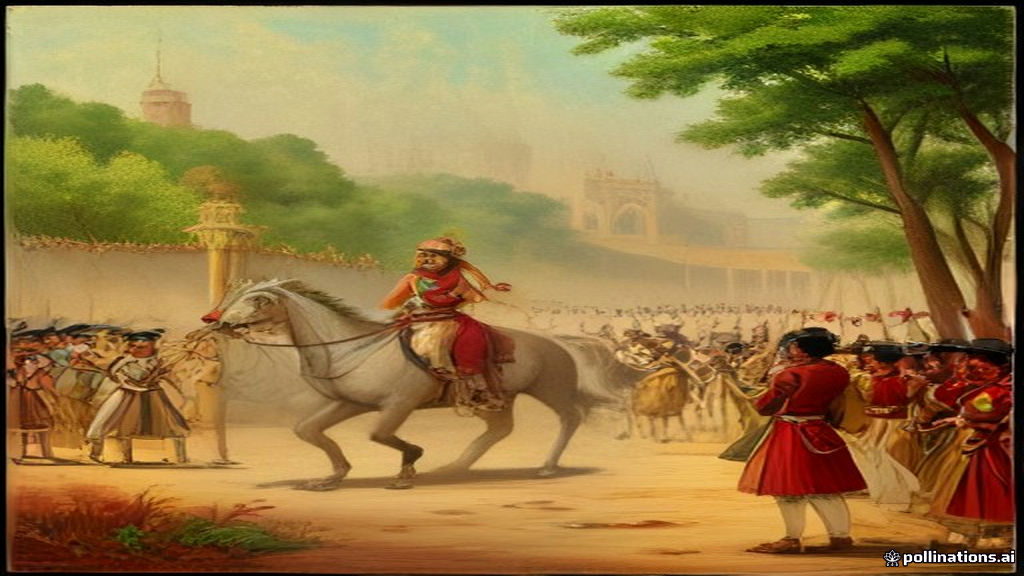
Why 1857 still matters
Imagine a massive mutiny that shook the British Empire in a single summer – that was the First War of Indian Independence, 1857. It wasn’t just a battle, it was a turning point that lit the spark for later freedom movements.
💡 In Simple Words: In 1857 Indian soldiers (called sepoys) and many civilians rose up against British rule because they felt disrespected, over‑taxed, and forced to betray their religion. The rebellion lasted several months, ended with British victory, but it showed that Indians could unite against oppression.
What sparked the 1857 Revolt?
To understand the revolt, think of a pressure cooker. The steam builds up from many small problems until finally the lid blows off. The 1857 uprising had both immediate triggers and deeper, long‑standing grievances.
Immediate triggers
- Enfield rifle cartridge – The new rifle used a cartridge greased with animal fat. Soldiers believed the fat came from cows (sacred to Hindus) and pigs (taboo for Muslims). Using it felt like a forced betrayal of faith.
- Annexation of Oudh – The British took over the kingdom of Oudh (Awadh) in 1856, cutting off the salaries of many Indian soldiers who served there.
Long‑term grievances
- Economic exploitation – British policies forced Indian farmers to grow cash crops for export, leaving them hungry.
- Social interference – Laws like the “Doctrine of Lapse” let the British seize any princely state without a natural heir, ignoring local customs.
- Military discrimination – Indian sepoys earned less than their British counterparts and were denied promotions.
| Cause | Effect on the Revolt |
|---|---|
| Enfield cartridge controversy | Immediate spark among soldiers in Meerut |
| Annexation of Oudh | Loss of patronage, anger in North India |
| Economic hardships | Peasants joined the fight for land |
| Doctrine of Lapse | Princes felt their sovereignty threatened |
Who led the fire?
There was no single commander, but several charismatic leaders emerged from different regions, much like a group of captains steering a fleet.
Key Indian leaders
- Mangal Pandey – A sepoy from Barrackpore who famously attacked British officers; his act is often called the first shot of the rebellion.
- Rani Lakshmibai of Jhansi – The queen who rode into battle on a horse, defending her kingdom after the British tried to take it away.
- Bahadur Shah II – The last Mughal emperor; he was declared the symbolic head of the revolt, giving it a unifying banner.
British response
The British acted like a fire brigade trying to douse a blaze. They brought in extra troops from other colonies, used heavy artillery, and promised harsh punishments to anyone caught supporting the rebels.
How the revolt unfolded
The rebellion spread like a wave, starting in Meerut and quickly moving to Delhi, Kanpur, Lucknow, and many smaller towns.
Major battles
- Meerut (May 1857) – Sepoys mutinied, killed their British officers, and marched to Delhi.
- Delhi (Sept 1857) – Rebels captured the city and proclaimed Bahadur Shah II as emperor; the British recaptured it in September after a brutal siege.
- Kanpur (June–July 1857) – Nana Sahib led a large force; after a fierce siege, British survivors were massacred.
- Lucknow (July–Nov 1857) – The British Residency endured a 5‑month siege before being relieved.
Aftermath and impact
Even though the British won, the revolt forced a major shift in how they governed India.
- End of Company rule – The East India Company, a private trading firm, lost its authority; the British Crown took direct control (the Raj).
- Reforms in the army – British recruited more soldiers from regions they considered “loyal” (like Punjab) and reduced Indian officers’ powers.
- Political awakening – The rebellion showed that a united Indian front was possible, inspiring later leaders like Bal Gangadhar Tilak and Mahatma Gandhi.
📝 Likely Exam Questions
- Explain two immediate causes of the 1857 revolt.
Answer: The Enfield rifle cartridge, greased with animal fat, offended Hindu and Muslim soldiers. The annexation of Oudh removed the salaries and patronage of many Indian troops, creating immediate anger. - Discuss the role of Rani Lakshmibai in the rebellion.
Answer: Rani Lakshmibai defended Jhansi against British annexation, led her troops in battle, and became a symbol of female bravery and resistance. - How did the 1857 revolt change British administration in India?
Answer: The British Crown replaced the East India Company, leading to the establishment of the British Raj. Military recruitment policies were altered, and some administrative reforms were introduced to placate Indian elites. - Compare the short‑term outcome of the revolt with its long‑term impact on the Indian freedom movement.
Answer: Short‑term, the rebellion was crushed, and many leaders were executed. Long‑term, it ignited nationalist sentiment, proved that coordinated resistance was possible, and set the stage for organized movements in the 20th century.