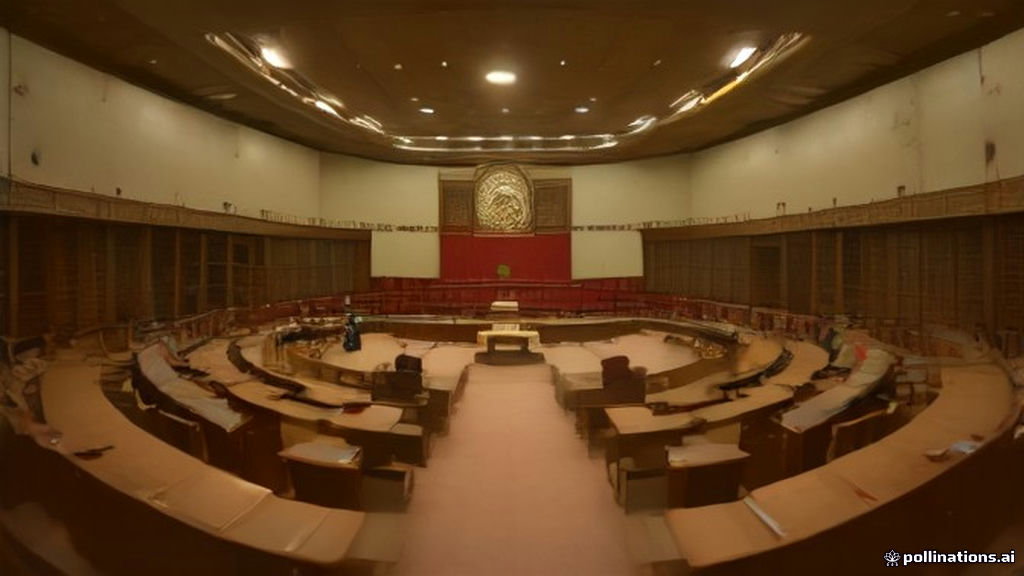
Ever wondered who decides the money you see on your school fees or the roads you travel on? That’s the Lok Sabha and Rajya Sabha at work!
In simple words, the Lok Sabha and Rajya Sabha are two teams in India’s Parliament. The Lok Sabha looks after the people’s wishes, while the Rajya Sabha checks and balances those decisions. Together they make laws that affect our daily lives.
Union Legislature in a Nutshell
The Union Legislature, or Parliament, is like the rulebook for the whole country. It has two houses: the Lok Sabha (lower house) and the Rajya Sabha (upper house). Think of it as a two‑player game where both need to agree before a move is final.
Key Powers of the Lok Sabha
- Money Bill Authority: Only the Lok Sabha can introduce a Money Bill, which deals with taxes, government spending, or loans. The Rajya Sabha can only suggest changes, and the Lok Sabha can accept or reject them within 14 days.
- Confidence Vote: The government stays in power only if it has the confidence of the Lok Sabha. If the Lok Sabha passes a no‑confidence motion, the Prime Minister must resign.
- Legislative Power: The Lok Sabha can pass, amend, or reject any ordinary bill. If the Rajya Sabha disagrees, the bill can be sent to a joint sitting where the Lok Sabha’s larger numbers usually win.
- Budget Approval: The annual Union Budget is presented in the Lok Sabha and must be passed there first.
Key Powers of the Rajya Sabha
- Review and Delay: The Rajya Sabha can review, suggest amendments, or delay ordinary bills for up to six months (three months at a time). This gives it a chance to refine laws.
- Legislative Initiatives: It can introduce most types of bills except Money Bills. It can also start discussions on important national issues.
- Representing States: Members are elected by state legislatures, so the Rajya Sabha voices the interests of individual states in the Union’s decisions.
- Special Powers: It can approve the creation of new All‑India Services (like the Indian Administrative Service) and can also pass a resolution to create a new state or change state boundaries.
Where Their Powers Overlap
- Passing Ordinary Bills: Both houses must approve a bill for it to become law. If they disagree, a joint sitting decides.
- Amendments to the Constitution: Any change to the Constitution needs a two‑thirds majority in both houses.
- Impeachment of the President: Both houses can start the impeachment process, though the final vote happens separately in each house.
How a Bill Becomes Law (Flowchart)
graph TD
A[Bill introduced in Lok Sabha] --> B[Debated & voted]
B --> C{Is it a Money Bill?}
C -- Yes --> D[Only Lok Sabha decides]
C -- No --> E[Sent to Rajya Sabha]
E --> F[Rajya Sabha suggests changes]
F --> G[Lok Sabha accepts changes?]
G -- Yes --> H[Bill passed to President]
G -- No --> I[Joint sitting of both houses]
I --> H[President gives assent]
H --> J[Bill becomes law]
Quick Comparison Table
| Power | Lok Sabha | Rajya Sabha |
|---|---|---|
| Introduce Money Bill | Only Lok Sabha can | Can only suggest amendments |
| Vote of No‑Confidence | Can bring down government | Cannot |
| Amend ordinary bills | Final say (larger numbers) | Can delay up to 6 months |
| Represent states | Directly elected by people | Elected by state legislatures |
| Constitution amendment | Needs 2/3 majority | Needs 2/3 majority |
📝 Likely Exam Questions
- What is a Money Bill and which house has the exclusive right to introduce it?
A Money Bill deals only with taxes, government expenditure or loans. Only the Lok Sabha can introduce it; the Rajya Sabha can only recommend changes. - Explain the significance of a no‑confidence motion.
A no‑confidence motion is a vote in the Lok Sabha that tests whether the government still enjoys majority support. If it loses, the Prime Minister must resign and a new government is formed. - How does the Rajya Sabha check the decisions of the Lok Sabha?
The Rajya Sabha can review and suggest amendments to ordinary bills, delay them for up to six months, and represent state interests, ensuring the Lok Sabha’s decisions are balanced. - Describe the process of a joint sitting of Parliament.
When Lok Sabha and Rajya Sabha disagree on a bill, the President may call a joint sitting. Members of both houses meet together, and the decision is taken by a simple majority. Because the Lok Sabha has more members, its view usually prevails. - List two special powers of the Rajya Sabha that the Lok Sabha does not have.
The Rajya Sabha can approve the creation of new All‑India Services and can pass resolutions for the creation of new states or alteration of state boundaries.
#ICSE#Class 10#History#Civics#Union Legislature
More from us