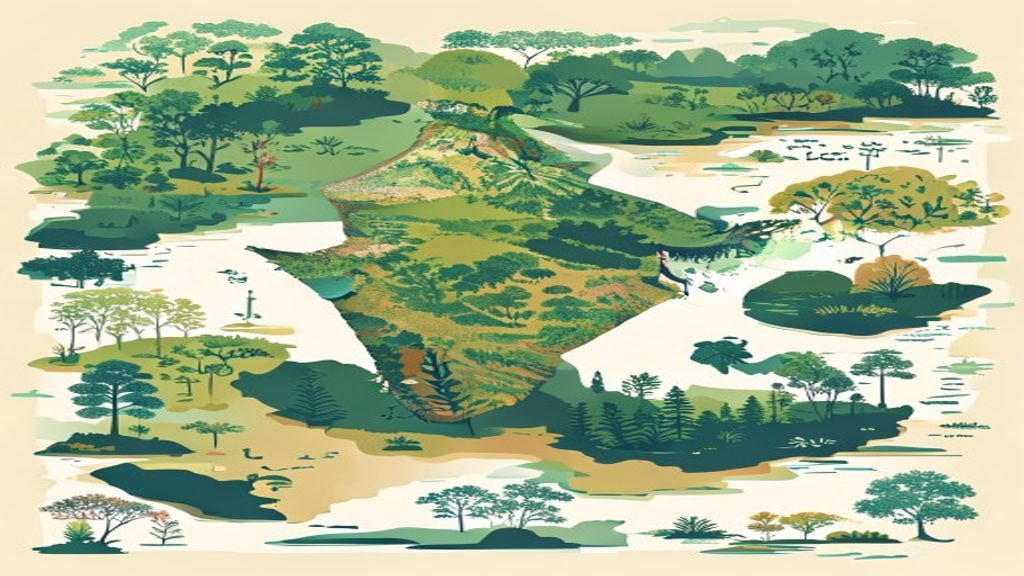
Why natural vegetation is a hot topic for ICSE students
Ever wondered why a map of India looks like a patchwork quilt of green? That’s nature’s own design, and it shows up in every geography exam.
💡 In Simple Words: Natural vegetation is the collection of plants that grow in an area without any human help. In India, the mix of forests, grasslands and mangroves changes from the scorching desert in the west to the chilly hills in the north.
What is natural vegetation?
Natural vegetation means the plants that would grow there if we left the land alone. It’s different from cultivated crops that farmers plant. Think of it as the “default outfit” of a region.
How climate shapes vegetation in India
Climate is the biggest boss that decides which plants can survive. It includes temperature, rainfall, humidity and the length of the dry season.
Key climatic factors
- Rainfall amount – More rain usually means taller, evergreen trees.
- Rainfall distribution – If rain comes all year, trees don’t need to shed leaves.
- Temperature – Warm places favor tropical species; cold spots favor conifers.
- Seasonality – A long dry spell forces many trees to lose their leaves to save water.
Imagine a garden hose. Turn the tap on fully and the water gushes everywhere – that’s like heavy, year‑round rain supporting evergreen forests. Turn the tap to a drizzle that stops for weeks, and only drought‑tolerant plants survive – that’s the dry‑deciduous and thorn zones.
Major vegetation zones of India
India can be split into six main natural vegetation zones. Each zone matches a climate pattern and has its own star plants.
| Zone | Typical Climate | Dominant Plants | States / Regions |
|---|---|---|---|
| Tropical Evergreen Forest | High rainfall (>2000 mm), no dry season | Mahogany, rosewood, teak, lots of epiphytes (plants that grow on other plants) | Western Ghats, Andaman & Nicobar, parts of Northeast |
| Tropical Moist Deciduous Forest | Rainfall 1000‑2000 mm, short dry period | Sal, teak, mango, bamboo | Central India, parts of Odisha, West Bengal |
| Tropical Dry Deciduous Forest | Rainfall 500‑1000 mm, long dry season | Teak, tendu, sandalwood | Deccan plateau, parts of Gujarat, Madhya Pradesh |
| Thorn Forest & Scrub | Rainfall | Acacia, cactus, xerophytes (water‑saving plants) | Rajasthan, parts of Gujarat, interior Karnataka |
| Montane (Himalayan) Forest | Cool, high‑altitude, moderate rain | Deodar, fir, oak, rhododendron | Himalayan states – Himachal Pradesh, Uttarakhand, Sikkim |
| Mangrove & Coastal Wetland | Saline water, tidal influence, high humidity | Rhizophora, Avicennia, mangrove associate grasses | Sundarbans, West Bengal coast, Andaman coast |
Quick comparison of the zones
- Evergreen vs. Deciduous – Evergreen trees keep leaves all year because they never face a severe dry spell. Deciduous trees drop leaves to survive the dry months.
- Moist vs. Dry Deciduous – Moist zones get a longer rainy season, so trees grow larger and denser.
- Thorn forest – Think of a desert garden with spiky shrubs and tiny leaves.
- Montane forests – Like a cool, misty mountain resort full of conifers.
- Mangroves – Nature’s seawall; roots breathe air while standing in salty water.
How to remember the zones for your exam
Try this little trick: picture India as a pizza. The crust (west) is dry and crunchy – that’s the thorn forest. The sauce (central) is medium‑spicy – that’s the moist and dry deciduous zones. The cheese (south‑west) is rich and creamy – that’s the evergreen forest. The toppings on the edge (north‑east) are cool and fresh – that’s the montane zone. Finally, the drizzle of olive oil around the rim represents the mangroves hugging the coastline.
📝 Likely Exam Questions
- List the major natural vegetation zones of India and mention one characteristic plant of each.
Answer: Evergreen (Mahogany), Moist Deciduous (Sal), Dry Deciduous (Teak), Thorn (Acacia), Montane (Deodar), Mangrove (Rhizophora). - Explain how rainfall influences the type of vegetation found in a region.
Answer: More rainfall supports evergreen forests that keep leaves year‑round; moderate rain leads to deciduous forests that shed leaves during dry periods; low rainfall favors thorn scrub and xerophytic plants. - Why do mangroves grow only along coastal areas?
Answer: They are adapted to salty, water‑logged soils and tidal fluctuations; their aerial roots allow oxygen intake in an anaerobic environment. - Compare tropical moist deciduous forest with tropical dry deciduous forest.
Answer: Moist deciduous receives 1000‑2000 mm rain, has a short dry season, and supports denser growth like Sal. Dry deciduous gets 500‑1000 mm rain, a longer dry spell, and species like teak and sandalwood that tolerate drought. - What climatic factor is most responsible for the existence of thorn forest in Rajasthan?
Answer: Very low annual rainfall (