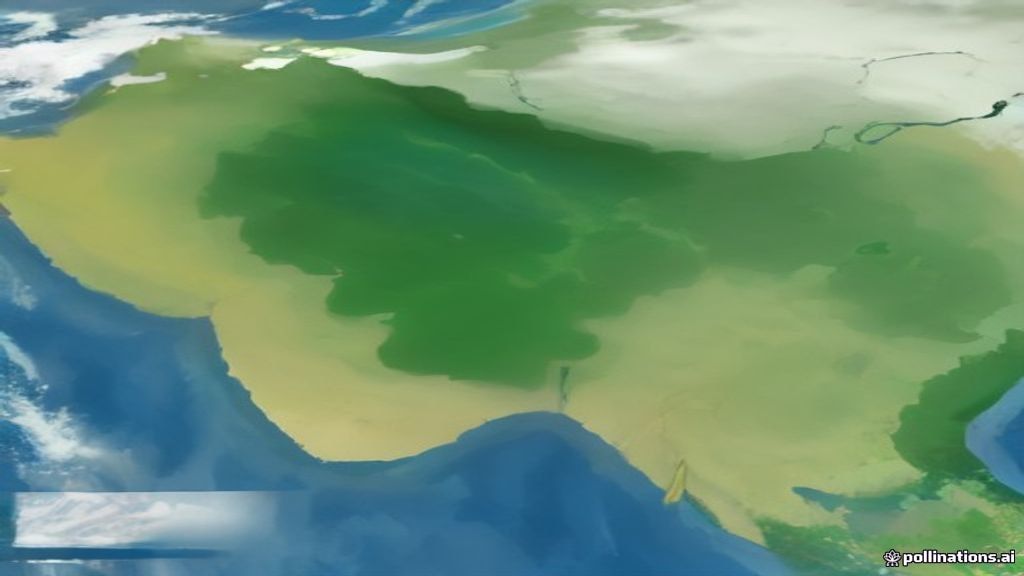
Why talk about plants when you’re studying geography?
Plants are the living map of a country – they tell you about climate, soil, and even human history. India’s green cover is a patchwork of forests, grasslands, and deserts that makes the subject both colourful and exam‑friendly.
💡 In Simple Words: Natural vegetation is the collection of plants that grow in a place without any help from people. In India, you’ll find everything from rain‑loving jungles in the south to thorny bushes in the west, each matching the local weather and soil.
What is natural vegetation?
Natural vegetation means the plant life that appears on its own, guided only by climate, soil type, and topography. Humans may cut or plant trees later, but the original pattern is set by nature.
Major vegetation zones of India
India can be split into six broad vegetation zones. Think of them as different “rooms” in a giant house, each with its own temperature, lighting, and furniture (plants).
- Tropical Evergreen Forest – dense, year‑round green canopy found in the Western Ghats and the Andaman‑Nicobar Islands. High rainfall (more than 200 cm) and warm temperatures keep the leaves from dropping.
- Tropical Deciduous Forest – trees shed leaves in the dry season. Common in central India (Madhya Pradesh, Chhattisgarh) where rain is moderate (100‑200 cm).
- Thorn Forest and Scrub – hardy, spiny shrubs survive on less than 50 cm of rain. Dominates the Deccan plateau and parts of Rajasthan.
- Montane Forest – cool, mist‑laden forests on hills and mountains such as the Himalayas and the Nilgiris. Moisture comes from fog and moderate rain.
- Grasslands (Savanna) – wide open grass seas with scattered trees, typical of the central Deccan and parts of the Indo‑Gangetic plain during the dry months.
- Mangrove Swamps – salt‑tolerant trees and shrubs growing where river meets sea, especially along the Sundarbans and the east coast.
Quick comparison table
| Zone | Typical Rainfall (cm) | Key Species | Location |
|---|---|---|---|
| Tropical Evergreen | >200 | Rosewood, Teak, Mahogany | Western Ghats, Andamans |
| Tropical Deciduous | 100‑200 | Sal, Teak, Babul | Central India, parts of North-East |
| Thorn Forest | Babool, Khejri, Acacia | Rajasthan, Deccan plateau | |
| Montane | 50‑150 (mostly as mist) | Rhododendron, Oak, Pine | Himalayas, Nilgiris |
| Grasslands | 80‑120 | Shrub grass, Teak saplings | Central Deccan, parts of Ganga plain |
| Mangrove | 150‑250 (tidal) | Rhizophora, Avicennia, Sundari | Sundarbans, Bay of Bengal coast |
Factors that shape India’s vegetation
Three main “ingredients” decide which plants grow where:
- Rainfall – the amount and timing of rain. Heavy, reliable rain supports evergreen forests; erratic or scarce rain pushes plants to become drought‑tolerant.
- Temperature – warm climates encourage fast‑growing trees, while cooler high‑altitude zones favour conifers and shrubs.
- Soil type – sandy, lateritic (iron‑rich), or alluvial (river‑deposited) soils each hold water differently, influencing root systems and plant choices.
Imagine the three factors as the three knobs on a music mixer: turn up the rain, lower the temperature, and you get a completely different “song” of plants.
Key species you should remember
When an exam asks for “important trees of a zone,” they usually expect a short list. Here’s a cheat‑sheet:
- Evergreen – Rosewood, Mahogany, Teak.
- Deciduous – Sal (Shorea robusta), Teak, Babul (Acacia).
- Thorn – Babool (Acacia nilotica), Khejri (Prosopis juliflora), Ber (Ziziphus).
- Montane – Oak, Pine, Rhododendron.
- Grassland – Dhoomak (Saccharum spontaneum), Kharif crops like millets often grow here after rains.
- Mangrove – Sundari (Heritiera fomes), Rhizophora, Avicennia.
How human activity modifies natural vegetation
Even though the term says “natural,” people have reshaped the picture. Deforestation for timber, shifting agriculture, and urban expansion have turned many evergreen patches into secondary deciduous or even barren land. Knowing the original zone helps you spot what’s been altered.
Quick summary for revision
- India’s vegetation is grouped into six zones, each linked to rainfall, temperature, and soil.
- Evergreen forests need >200 cm rain; deciduous need 100‑200 cm; thorn forests survive on
- Key trees: Sal (deciduous), Rosewood (evergreen), Babool (thorn), Oak (montane), Sundari (mangrove).
- Human pressure can convert a dense forest into scrub or grassland, so exam questions often ask for “original” vegetation.
📝 Likely Exam Questions
- Define natural vegetation.
Answer: Natural vegetation is the plant community that develops in an area without human intervention, governed mainly by climate, soil, and topography. - List the major vegetation zones of India and give one characteristic species for each.
Answer: (1) Tropical Evergreen – Rosewood; (2) Tropical Deciduous – Sal; (3) Thorn Forest – Babool; (4) Montane – Oak; (5) Grassland – Dhoomak; (6) Mangrove – Sundari. - Explain how rainfall influences the type of vegetation in India.
Answer: High, evenly distributed rainfall (>200 cm) supports evergreen forests where trees retain leaves year‑round. Moderate rainfall (100‑200 cm) leads to deciduous forests that shed leaves in dry months. Low rainfall ( - Why are mangroves important in coastal ecology?
Answer: Mangroves act as a buffer against storm surges, trap sediments, provide breeding grounds for fish, and store carbon, making them vital for coastal protection and biodiversity. - How does human activity alter natural vegetation patterns?
Answer: Logging, clearing land for agriculture, and urbanisation remove native trees, convert forests to secondary growth or barren land, and introduce non‑native species, thereby changing the original vegetation zone.