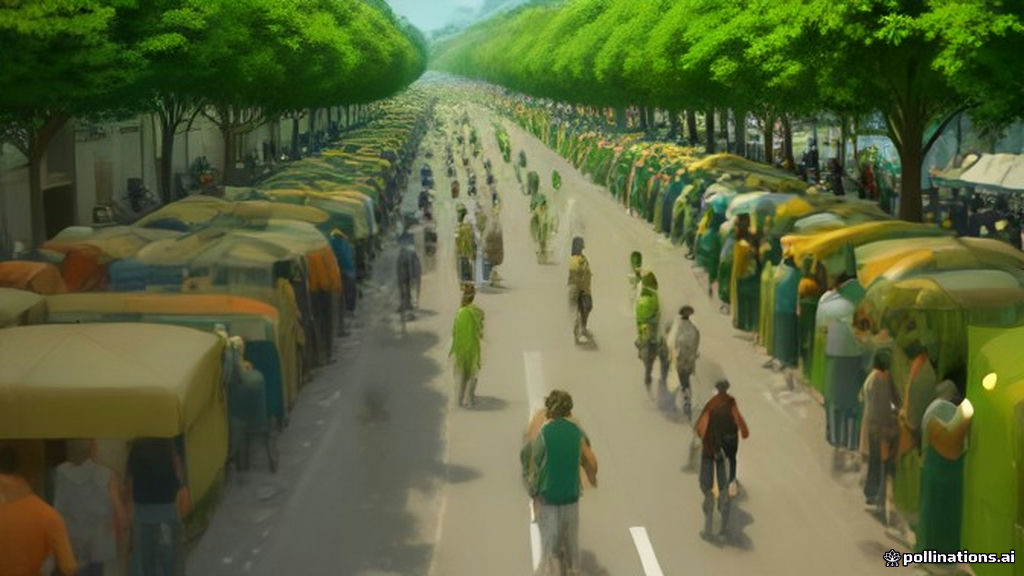
Ever wondered why your school playground feels more crowded each year?
💡 In Simple Words: Human population growth is simply the rise in the number of people on Earth. When births outnumber deaths and more people move in, the total count goes up, affecting resources and the environment.
What is Human Population Growth?
Human population growth means the increase in the number of people living on Earth over time. Think of it like a bathtub filling up – each new baby adds a drop, and fewer deaths keep the water level rising.
Main Causes of Population Increase
- High birth rate: More babies are born than die.
- Reduced death rate: Better medicine and sanitation let more people live longer.
- Immigration: People moving into a country add to its numbers.
- Improved nutrition: Better food means fewer famines.
Effects of Rapid Population Growth
- Strain on food, water, and housing.
- Deforestation and loss of wildlife habitats.
- Increased pollution and waste.
- Higher unemployment and poverty levels.
- Greater pressure on health and education services.
| Cause | Typical Effect |
|---|---|
| High birth rate | More children to educate and feed |
| Lower death rate | Older population needing care |
| Urban migration | Overcrowded cities, housing shortages |
| Improved agriculture | Temporary boost in food supply, later may lead to overuse of land |
Theories that Explain Population Trends
Malthusian theory (named after Thomas Malthus) suggests that population grows faster than food supply, eventually leading to famine unless checked. Imagine a balloon that keeps inflating faster than the room can hold it – it will eventually burst.
Demographic transition model describes four stages a country moves through: high birth & death rates, then death rates fall, then birth rates fall, and finally both are low. It's like a video game where you start with lots of lives (high birth) and many enemies (high death), then the enemies get weaker (lower death), and you start playing more carefully (lower birth).
Controlling Population Growth – What Can Be Done?
Governments and societies use several tools to keep the population rise at a sustainable pace.
- Education, especially for girls – educated women tend to have fewer children.
- Family planning services – contraceptives help couples decide when and how many kids.
- Economic incentives – tax benefits for smaller families.
- Legal policies – age of marriage laws, child labor bans.
Quick Revision Summary
- Population growth = more people over time.
- Key drivers: high birth rate, low death rate, immigration.
- Major impacts: resource scarcity, environmental damage, social stress.
- Control methods: education, family planning, policies.
- Remember the Demographic Transition Model’s four stages.
📝 Likely Exam Questions
- Define human population growth.
Answer: It is the increase in the number of individuals in a human population over a period of time. - List two major causes of population increase.
Answer: High birth rate and reduced death rate (due to better healthcare). - Explain one environmental impact of rapid population growth.
Answer: It leads to deforestation as more land is cleared for housing and agriculture, which reduces biodiversity. - What is the Demographic Transition Model? Briefly describe its first two stages.
Answer: It is a theory that describes how a country’s population changes over time. Stage 1 – high birth and death rates; Stage 2 – death rates fall while birth rates remain high, causing rapid population growth. - Suggest two measures to control population growth.
Answer: Providing education, especially for girls, and offering family planning services.