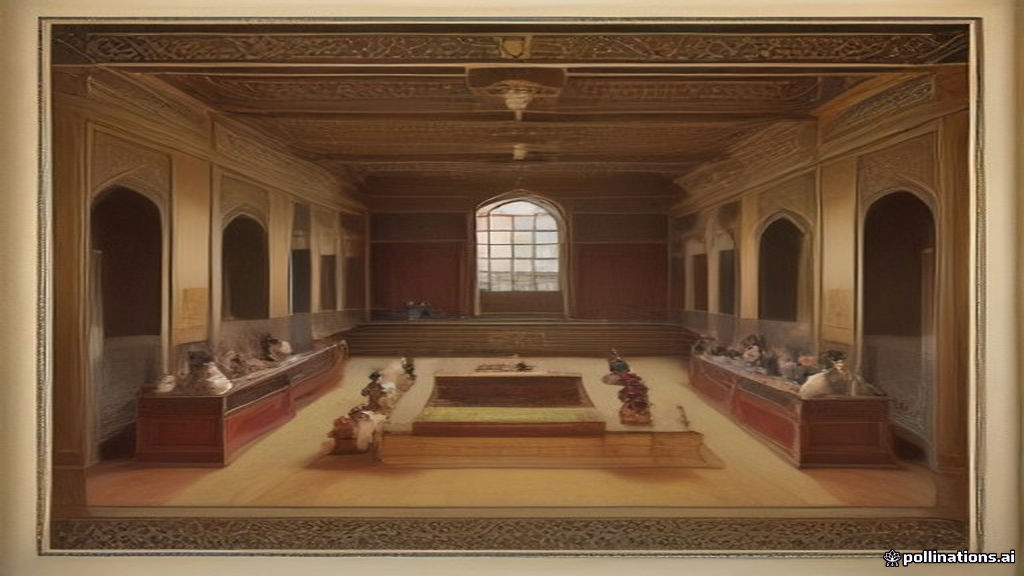
Ever wondered why a 16th‑century painting can tell us what people ate at a royal feast?
Mughal court culture is the everyday life, art, and rules of the emperor’s palace. By looking at paintings, poems, and travelers' notes, we can piece together how people behaved, dressed, and thought.
What counts as a primary source?
A primary source is something created at the time of the event – like a photograph is to a modern concert, a Mughal miniature is to a 16th‑century banquet. These sources give us raw clues, not someone’s later interpretation.
Mughal court culture through paintings
Miniature paintings are tiny, detailed artworks that decorated manuscripts. Think of them as Instagram posts of the era: they capture a moment, show clothing, food, and gestures. Because the artist worked in the court, the picture often highlights what the emperor wanted to display – wealth, power, and refined taste.
- What we see: elaborate dresses, jeweled swords, elaborate feasts.
- What it tells us: hierarchy (who stands where), gender roles (who is visible), and taste in art.
Mughal court culture through poetry
Poets like Abdul Rahim wrote verses praising the emperor’s generosity. Poetry is like a song lyric that celebrates a celebrity; it reveals what qualities were admired.
- Key terms: ghazal (a poetic form with rhyming couplets) and panegyric (a fancy word for praise poem).
- Insights: court etiquette (how to address the emperor), values (valor, piety), and the role of language (Persian was the official tongue).
Mughal court culture through travelogues
European travelers such as Jean-Baptiste Tavernier wrote about what they saw. Their accounts are like a vlog – they describe sights and sounds, but they also carry personal bias.
- What they note: architecture of the palace, daily rituals, and the emperor’s audience.
- Limitations: foreigners might misunderstand customs, so we cross‑check with local sources.
Putting the clues together: a historian’s toolkit
Historians treat each source like a puzzle piece. By comparing the picture, the poem, and the travel note, they can confirm or question a detail.
Quick comparison of sources
| Source | Strength | Weakness | Typical clue |
|---|---|---|---|
| Miniature paintings | Visual detail, immediate | Artist bias, idealised | Dress, food, spatial hierarchy |
| Poetry (ghazal, panegyric) | Shows valued virtues | Exaggerated praise | Etiquette, language preferences |
| Travelogues | Outside perspective, descriptive | Misinterpretation, limited access | Architecture, public ceremonies |
How to answer a CBSE question on this
Start with a short definition of the source type, give one concrete example, explain what it reveals about court life, and finish by noting its limitation. Keep the answer under 80 words for a 5‑mark question.
📝 Likely Exam Questions
- Q1: How do Mughal miniature paintings help us understand court etiquette?
A: Paintings show who stands closest to the emperor, the gestures used for greeting, and the lavish dress of nobles, revealing a strict hierarchy and formal behavior. - Q2: Explain one advantage and one drawback of using European travelogues as sources for Mughal court culture.
A: Advantage – they describe the palace layout and public ceremonies in vivid detail. Drawback – travelers often misread symbols and may emphasize exotic aspects over everyday life. - Q3: What does a panegyric poem tell us about the values prized in the Mughal court?
A: It praises the emperor’s generosity, bravery, and piety, indicating that these qualities were publicly celebrated and expected of rulers. - Q4: Compare the information about royal feasts obtained from paintings and poetry.
A: Paintings give visual evidence of the dishes, table settings, and participants, while poetry mentions the abundance and the emperor’s generosity, adding a moral dimension. - Q5: Briefly outline the steps a historian follows to reconstruct Mughal court culture from sources.
A: Identify the source, examine its content, note language and style, infer cultural practices, cross‑check with other evidence, and finally build a comprehensive picture.