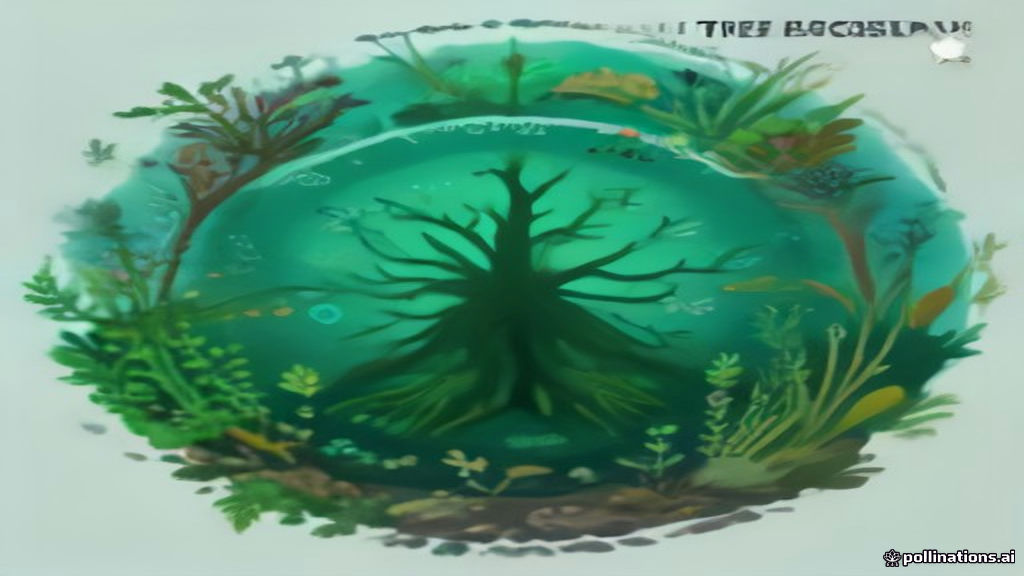
Ever wondered why a walk in a park feels so refreshing? That's nature’s ecosystem quietly balancing life around you.
💡 In Simple Words: An ecosystem is a community where living things like plants, animals, and microbes interact with non‑living stuff such as water, air, and soil. All these parts work together like a giant, living machine.
What is an Ecosystem?
An ecosystem (think of it as a neighborhood) includes every biotic (living) and abiotic (non‑living) element in a given area and the relationships among them. Imagine a river: the water, rocks, sunlight, fish, algae, and even the bacteria on a rock are all players in the same game.
Key components
- Biotic factors: plants, animals, fungi, microbes – anything that’s alive.
- Abiotic factors: sunlight, temperature, water, minerals – the physical backdrop.
- Interactions: predation, pollination, competition – how the players affect each other.
Types of Ecosystems
Broadly, ecosystems fall into two categories: terrestrial (land) and aquatic (water). The table below highlights the main differences.
| Feature | Terrestrial | Aquatic |
|---|---|---|
| Dominant medium | Soil & air | Water (fresh or salt) |
| Typical producers | Trees, grasses, shrubs | Algae, submerged plants |
| Common consumers | Mammals, insects, birds | Fish, crustaceans, plankton |
| Energy source | Sunlight filtered through canopy | Sunlight penetrates water column |
| Examples | Rainforest, desert, grassland | Lake, river, coral reef, ocean |
Biodiversity: The Variety of Life
Biodiversity (the word “bio” means life and “diversity” means variety) refers to the total range of living things at three levels:
- Genetic diversity: differences in DNA within a species – like the many shades of red in a tomato crop.
- Species diversity: the number of different species and how evenly they are represented – think of a garden with roses, daisies, and lilies.
- Ecosystem diversity: variety of habitats such as forests, wetlands, and coral reefs.
Why does it matter? High biodiversity makes ecosystems more resilient, just like a sports team with many skilled players can adapt to injuries.
Measuring biodiversity
Scientists use indices such as the Shannon‑Wiener index (a formula that accounts for both richness and evenness) and the Simpson index. You don’t need to memorize the equations for most CBSE exams, but you should know that a higher value means greater diversity.
Energy Flow and Food Chains
Energy enters an ecosystem as sunlight, which producers (plants) capture through photosynthesis – the process of turning light into food. From there, energy moves up through trophic levels (steps in a food chain): primary consumers eat plants, secondary consumers eat those herbivores, and so on. At each step, about 90 % of energy is lost as heat, so food chains are usually short (3‑5 levels).
Decomposers (fungi and bacteria) break down dead matter, releasing nutrients back to the soil, which producers reuse – completing the cycle.
Key Concepts to Remember
- Every ecosystem is a network of biotic and abiotic components.
- Terrestrial vs aquatic ecosystems differ mainly in the dominant medium and typical organisms.
- Biodiversity has three levels – genetic, species, ecosystem – and higher diversity = more stability.
- Energy flows in one direction: Sun → Producer → Consumer → Decomposer.
- Only about 10 % of energy transfers between trophic levels, limiting chain length.
- Keystone species (like a sea otter in kelp forests) have a disproportionate impact on ecosystem structure.
📝 Likely Exam Questions
- Define ecosystem and give two examples.
Answer: An ecosystem is a community of living organisms interacting with each other and with non‑living factors in a defined area. Examples: tropical rainforest, freshwater lake. - Explain the three levels of biodiversity with an example for each.
Answer: Genetic – different varieties of wheat; Species – tigers, elephants, and rhinos in a savanna; Ecosystem – mangrove forest, grassland, coral reef. - Why does energy decrease at each trophic level?
Answer: Because 90 % of energy is lost as heat during metabolism and movement (second law of thermodynamics), leaving only about 10 % for the next level. - What is a keystone species? Illustrate with a suitable example.
Answer: A keystone species has a large effect on its ecosystem relative to its abundance. Example: Sea otters keep sea‑urchin populations in check, protecting kelp forests. - List two differences between terrestrial and aquatic ecosystems.
Answer: (i) Dominant medium – soil & air vs water; (ii) Typical producers – trees & grasses vs algae & submerged plants.